

After Supreme Court tariff ruling, price relief unlikely as uncertainty deepens
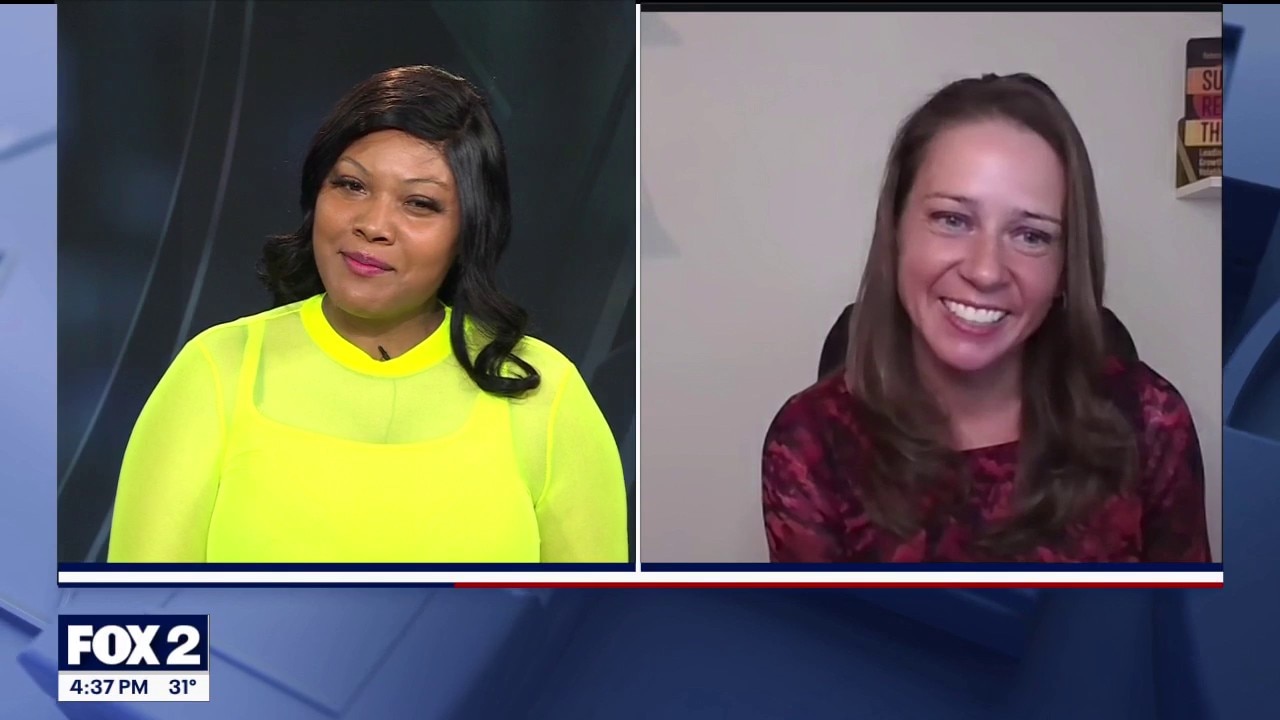
THE INTERVIEW| Court Ruling Curbs Power, But Price Relief Unlikely
A Supreme Court decision narrowing presidential tariff authority has not brought the price relief many hoped for. Economist Dr. Rebecca Homkes, faculty at Duke Corporate Executive Education and lecturer at London Business School, tells Hilary Golston tariffs have added only modestly to inflation but most of the costs have already been absorbed across supply chains, not reversed. While the ruling reins in one executive tool, the administration is turning to other statutes to maintain tariffs, keeping legal uncertainty and market volatility high. Homkes warns the Federal Reserve is likely to hold rates steady as inflation remains elevated and the labor market weakens, describing an economy that may not meet the technical definition of recession but increasingly feels like one for American consumers.
(FOX 2) - A Supreme Court ruling curbing presidential tariff authority is unlikely to bring meaningful price relief for consumers, according to economist Dr. Rebecca Homkes, who says most tariff costs were never fully passed along to households in the first place.
Speaking with Hilary Golston, Homkes said tariffs have contributed only modestly to inflation and companies absorbed much of the cost rather than raising prices dramatically.
"At this point it’s very difficult to pinpoint precisely, but we estimate around 0.4 to 0.5 percent of what we’re seeing in inflation does have that tariff pass through," said Homkes, a faculty member at Duke Corporate Executive Education and lecturer at London Business School who previously served as a fellow with the White House Council of Economic Advisers. "Most importers did not fully pass through costs. Over 90 percent of the cost of tariffs was borne by importers and companies themselves."
Homkes said the burden has been spread across businesses, supply chains and consumers.
Because so much of the cost has already been absorbed internally, Homkes said shoppers should not expect significant price declines even after the court’s decision limiting the president’s emergency tariff authority.
"It was highly unlikely that we’re going to see price declines," she said. "We might see prices flatten out or a wait and see approach similar to what we saw last summer. But no consumer should really anticipate big price decreases because we’re up for months of volatility."
Companies chose to absorb costs for several reasons, including elevated post pandemic inflation, a critical retail period and expectations that tariffs could face legal challenges.
"Organizations don’t want to pass on too much cost and then end up having to reverse it," Homkes said. "So there was more absorption waiting for the Supreme Court ruling, and now we’re going to have more wait and see."
The Supreme Court ruled that the president cannot use emergency powers under the International Emergency Economic Powers Act to impose broad tariffs, reaffirming that tariff authority rests with Congress. However, Homkes emphasized that the ruling was narrow and left other tools available to the administration.
"The court did two very significant things," she said. "They said the emergency powers act did not grant the executive the ability to issue tariffs and that the power of the purse still remains in Congress. But there are four or five additional statutes the president can use."
The administration has already turned to Section 122 of the Trade Act of 1974 to impose a new 15 percent global tariff. That provision allows tariffs to be implemented quickly without prior congressional approval or investigation, though it is likely to face legal challenges.
"I expect legal challenges on all sides," Homkes said. "But this was one of the very few tools they could use over a weekend without putting an investigation into play."
Congress is unlikely to move quickly to create a comprehensive tariff framework, she added, as lawmakers face midterm elections and heightened concerns about affordability.
"I think there will be reluctance to move very quickly on something which might further increase inflation or hurt the consumer," Homkes said. "For now the administration will likely stick with Section 122 while more targeted investigations move forward."
The ruling could also weaken U.S. leverage in trade negotiations, including future discussions involving the United States Mexico Canada Agreement.
"The bargaining power has been taken back a bit because the environment these negotiations happened under was a very significant tariff threat," she said. "That ability has been severely checked by this ruling."
Meanwhile the Federal Reserve is expected to remain cautious. Homkes said both inflation and the labor market are moving in the wrong direction relative to the Fed’s goals, making a rate cut in the near term unlikely.
"I would be surprised if they did anything but stay where they are when it comes to the March meeting," she said. "They don’t like to move when it’s a messy environment. They won’t lose anything by staying put but they could lose something by moving too quickly."
Despite steady headline economic growth, Homkes said underlying conditions suggest a fragile environment that feels recessionary for many Americans.
"We might actually be seeing a recessionary environment without the definition," she said. "Headline numbers look strong … but digging in two layers down some would argue we’re already in one."
Productivity is rising while hiring remains weak, what Homkes described as a jobless productivity boom that leaves policymakers uneasy.
"This is a shaky economy," she said. "Anyone who tries to say this is robust is not really looking at the data. You’ve got to triangulate in, and we’ve got a lot of shakiness right now."