

Burbot fishing booms in Michigan, worrying researchers and anglers that the species is faltering

Anglers worry about Burbot's fishing booming in Michigan
Burbot are one of the few fish species in the Great Lakes that spawn in the winter, which means tracking their populations can be a challenge. Making the task even more difficult is that the species is nocturnal.
(FOX 2) - Lawyer, eelpout, ling, bling - the freshwater cod species burbot goes by many names. However, it's the nickname poor-man's lobster that Bob Hinds takes issue with.
Burbot earned the moniker because when it's boiled then dipped in butter, it tastes like lobster. Hinds disagrees.
"I would say it tastes like cod. You have to boil it - that's how you cook it," he said.
And Hinds would know. A Northern Michigan charter fisherman whose business increasingly revolves around catching burbot, when someone wants to take a stab at catching the fish, they typically ask Hinds, who runs Central Coast Angling.
Burbot historically weren't a popular species to catch. But that's changing. Hinds has even cut back on his yellow perch fishing program due to the popularity of harvesting burbot.
"It's like anything. People hear something good and want to experience it and seek it out," he said.
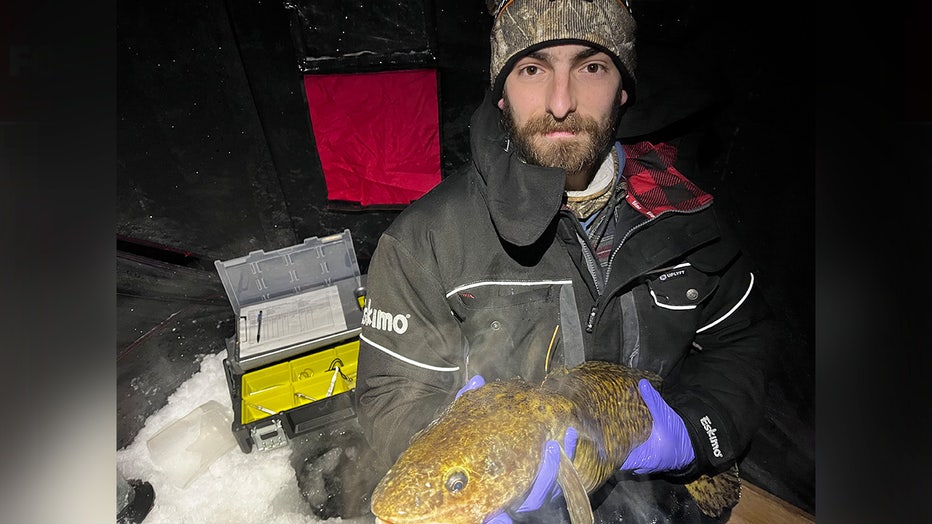
Andrew Shapiro, a Ph.D student at Michigan State University, holds a burbot.
It's been good for business. But as popularity spikes, so are the daily pressures facing burbot. The freshwater fish remains a poorly-understood species, but both anglers and researchers believe the population is disappearing.
Big picture view:
Burbot are one of the few fish species in the Great Lakes that spawn in the winter, which means tracking their populations can be a challenge. Making the task even more difficult is that the species is nocturnal.
Combined with their strange appearance, fishing for burbot has mostly been a hobby among a few anglers - despite the native Great Lakes fish residing in its waters as long as trout or white fish.
"They're not as well known as lake trout or salmon, but they have always had a very tight-lipped following of anglers," said Andrew Shapiro. "People are pretty fanatical about fishing. But in recent years, interest in burbot angling has been exponential."
Shapiro, a Ph.D. student at Michigan State University, is researching their migratory and spawning habits in the Great Lakes. His goal is "to spread the good burb-word" about burbot.
"People think they're ugly. They eat stuff that other fish don't. They're pretty opportunistic and will eat anything, which has a negative connotation," he said. "But that's changing. People think they're pretty now."
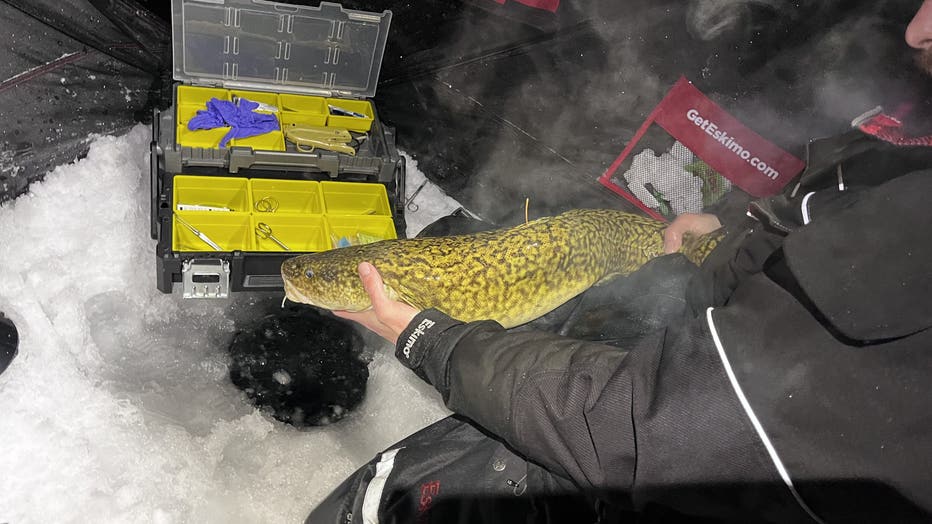
Andrew Shapiro is tagging burbot to better understand the cold water species that resides in deeper parts of the Great Lakes.
Burbot behavior
Burbot can grow up to 40 inches long and can live more than 20 years. Some studies suggest they start laying eggs at 4 years old. They're recognizable because of their eel-like appearance and the sensory organ that hangs below their chin — known as a barbel.
Unlike other Great Lakes fish species, burbot are active at night, which is when anglers like Hinds choose to look for them. He says the peak season for burbot fishing is in mid-March when they spawn, targeting transition areas that blend from rocks to grass.
And according to Shapiro, they have been known to travel over 70 miles from where they spawn in the winter before returning to the same location to lay eggs of their own.
The species prefers deeper, colder waters; inhabiting the bottom of larger systems like Saginaw Bay and Lake Michigamme, as well as larger inland waterways like Burt and Mullet lakes in the northern Lower Peninsula.
During spawning season, they'll gather in shallow areas under ice from December to February.
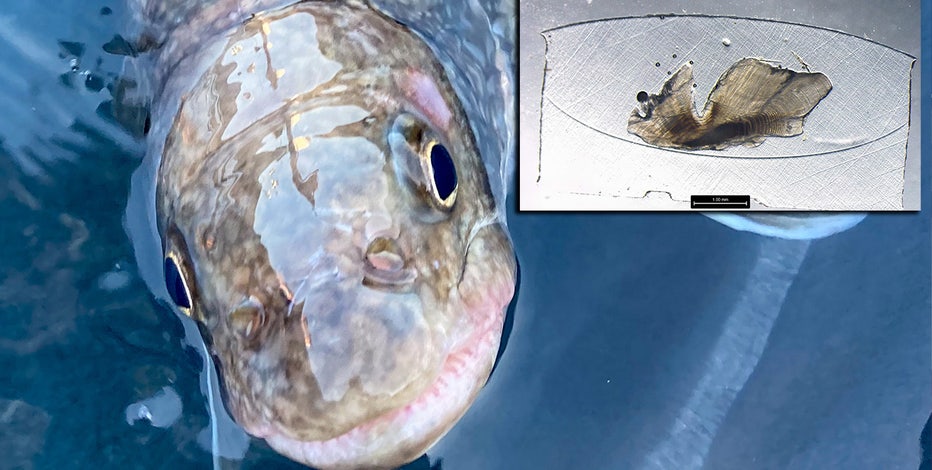
Oldest-ever Great Lakes lake trout recorded in Lake Superior
The best way to measure how old a fish is is by counting the number of rings formed on a chunk of calcium living in its inner ear. This lake trout, named Mary Catherine, had 62 rings.
The other side:
Most of the evidence is anecdotal, but Shapiro says anglers report catching fewer burbot every year.
"There's not any great data on that, but talk to any fisherman in the Great Lakes who fishes burbot, the fishing is not good right now," he said.
Popular ice fishing spots used by indigenous tribes once turned up hundreds of burbots in a single net. But now, areas like Green Bay in Wisconsin and the Keewenaw Peninsula along Lake Superior are no longer as productive.
Researchers say invasive zebra mussels siphoning nutrients from the water are to blame. Overfishing the species in the late winter, when it's most vulnerable, has not helped.
Some of the areas that continue to provide reliable sources of burbot are in the northwest corner of Michigan's Lower Peninsula and the southern shores of the Upper Peninsula along Lake Michigan.
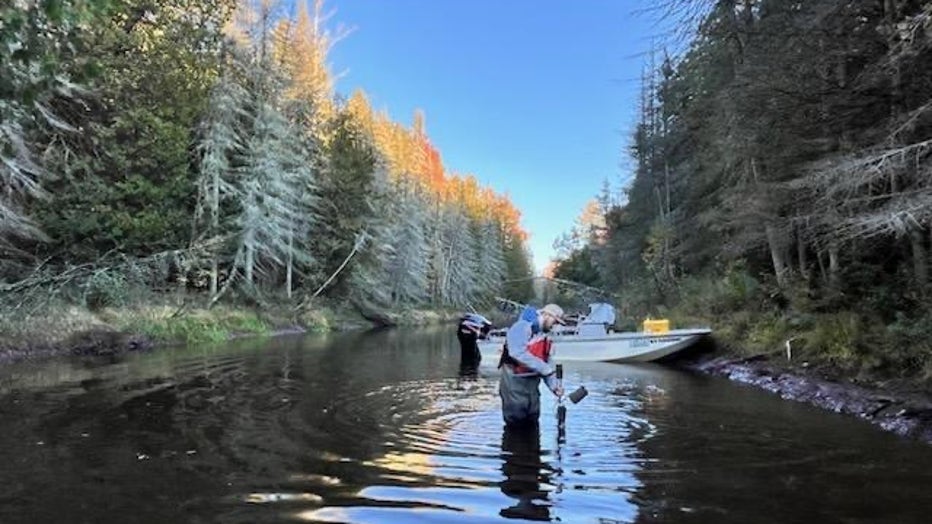
Burbot prefer deeper, colder waters for most of the year. During spawning season, they'll migrate to shallow waters.
Shapiro's research includes tagging the fish, which began in January 2025 in Little Bay De Noc, Big Bay De Noc, and their tributaries directly south of the Hiawatha National Forest in the UP.
Future plans include shifting tagging to where Hinds fishes in Grand Traverse Bay. His hope is to better understand the species.
New management
The state is also responding to the surging popularity by proposing catch limits on burbot.
In September, the Natural Resource Commission will weigh a new rule that restricts anglers from catching no more than five burbots a day.
The NRC said more anglers are targeting spawning burbots, while an increase in social media postings has boosted people's awareness of the species. The buzz has also driven more entries of burbot by master anglers.
"The impact of overharvesting burbot during the spawning run is unknown; however, due to the recent increase in harvest trends, more protection from harvest is prudent to maintaining this important native resource," reads the fishery's order before the NRC.
"It's a fine idea by the commission to manage them. Right now, there's no limit," Hinds said. "Personally, I limit on my boat because on some days, it's a free-for-all. We'd catch up to 60 a trip."
The Source: Interviews with a researcher, angler, and committee meeting agenda from the NRC.